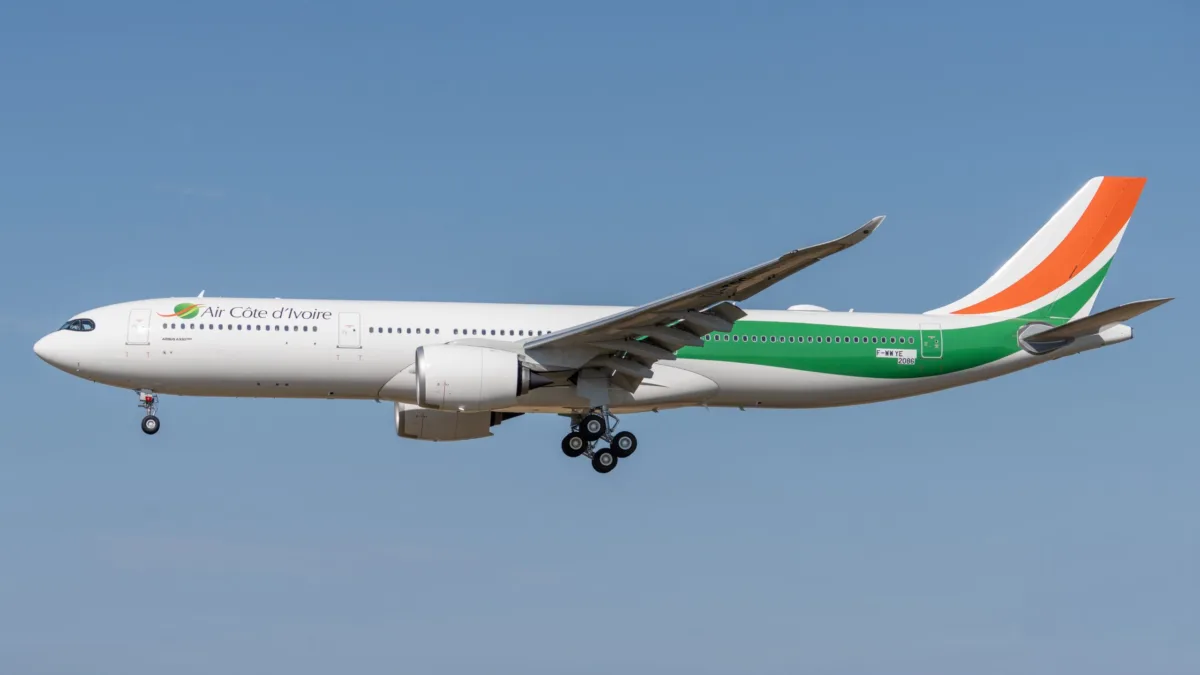
Air Côte d’Ivoire’s move into long-haul flying is really a test of whether Abidjan can support a network-carrier model, not just a new Paris route. The A330-900 gives the airline enough range and capacity to connect West Africa directly with Europe and, potentially, other long-haul markets.
The aircraft is only the first step
A330neo economics depend on more than seat count. Air Côte d’Ivoire must keep the aircraft flying enough hours, sell premium cabins well and feed the long-haul service with passengers from its regional network.
Abidjan has to function as a real connecting hub
The airline already serves a wide network across West and Central Africa. The strategic opportunity is to turn those short-haul routes into reliable feed for Paris and future long-haul destinations.
That means connection times, baggage transfers and schedule discipline matter as much as the onboard product.
Paris is the proving ground
Air France and Corsair already have strong positions on Abidjan–Paris. Competing effectively requires more than matching frequency: Air Côte d’Ivoire needs a clear value proposition for local, connecting and premium passengers.
The four-class cabin raises the revenue ambition
With First, Business, Premium Economy and Economy, the airline is betting on higher-yield demand rather than pure volume. That can improve economics if the premium cabins are sold consistently.
What success would unlock
If Paris performs well, the A330neo could support expansion toward the Middle East or North America and give the airline a stronger role in West African connectivity.
AeroSillage view: the real question is not whether Air Côte d’Ivoire can operate a widebody. It is whether Abidjan can become a hub strong enough to keep that widebody profitable year-round.
Sources
Airbus; Air Côte d’Ivoire.
Leave a Reply