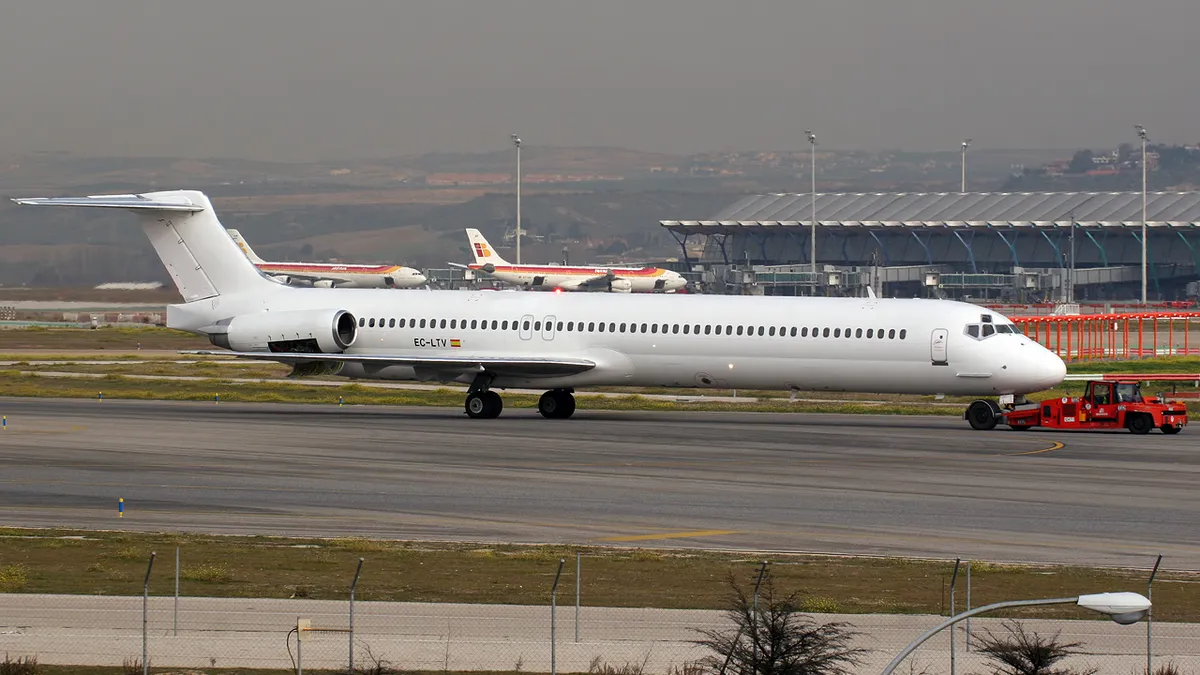
A Paris criminal court has convicted Spanish carrier Swiftair of involuntary manslaughter over the 2014 crash of Air Algérie flight AH5017 and imposed a €225,000 fine, the maximum penalty available in the case. The ruling, delivered on September 28, 2026, comes twelve years after the MD-83 crashed in Mali, killing all 116 people on board.
What the court found
The judgment identified shortcomings in Swiftair’s training and preparation of the crew operating McDonnell Douglas MD-83 EC-LTV. The aircraft was flying the Ouagadougou–Algiers service for Air Algérie under a wet-lease arrangement.
According to reports of the ruling, the court found that those shortcomings contributed with certainty to the accident. The trial took place in March 2026. Prosecutors had requested the maximum fine, while the defence sought acquittal.
Why the wet lease matters
Passengers saw an Air Algérie flight number, but Swiftair supplied the aircraft and crew. Under a wet lease, the operating company typically provides the aircraft, crew, maintenance and insurance.
That distinction is central to the ruling because it places legal attention on the company responsible for preparing and operating the crew, not only on the commercial airline whose brand appeared on the ticket.
116 people were killed
Flight AH5017 crashed near Gossi in northern Mali on July 24, 2014. All 110 passengers and six crew members died. The victims included 54 French nationals and 23 Burkinabè, alongside passengers from several other countries.
For families, the 2026 judgment closes the first-instance criminal trial after more than a decade of proceedings. Victim groups including FENVAC and AH5017-Ensemble described the ruling as an important step in recognising criminal responsibility.
The safety investigation reached a different type of conclusion
The Mali-led safety investigation, conducted with technical assistance from France’s BEA, focused on accident prevention rather than criminal responsibility.
It described a sequence in which probable ice-crystal blockage of engine pressure sensors after the aircraft levelled at flight level 310 produced erroneous indications and insufficient thrust. Airspeed then decayed until the aircraft stalled and was not recovered.
The safety report also noted that engine anti-icing systems had not been activated and that the crew did not respond adequately to the loss of speed and subsequent stall.
Safety findings and criminal liability are not the same thing
The technical investigation sought to explain how the accident happened and how similar events could be prevented. The criminal court examined whether negligence by the operator contributed legally to the deaths.
The 2026 ruling therefore does not replace the safety investigation. It adds a different layer: responsibility for crew preparation and training before the flight.
Why the ruling matters beyond AH5017
Wet lease and ACMI arrangements are widely used by airlines to add capacity quickly. The case shows that outsourcing an aircraft and crew does not make operational responsibility disappear. The operator supplying those resources remains accountable for training, preparation and compliance with safety standards.
For airlines using contracted capacity, the lesson is that commercial branding and operational responsibility may sit with different companies: and investigators or courts will examine the organisation actually controlling the operation.
What happens next
The next legal step depends on whether Swiftair appeals. Until that process is clear, the September 28 ruling remains the key first-instance criminal judgment in the case.
Sources
Paris criminal court ruling as reported by AFP and EFE; FENVAC/AH5017-Ensemble; final Mali safety investigation with technical assistance from the BEA.
Leave a Reply