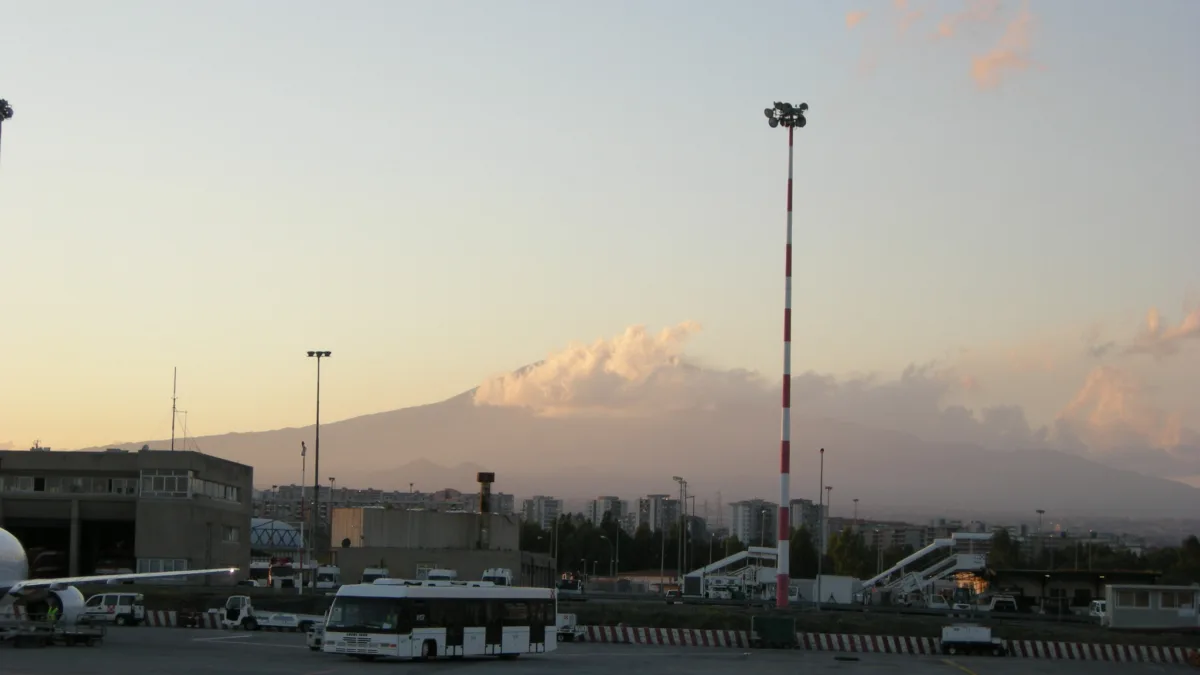
Catania-Fontanarossa reopened on the evening of September 15, 2026 after restrictions linked to Mount Etna’s ash plume were lifted. The reopening restored arrivals and departures progressively, but it did not mark the end of the month’s disruption: renewed volcanic activity forced further suspensions later in September.
Updated October 2, 2026: this article keeps its original publication date and now includes the subsequent operational developments.
Why the September 15 reopening was only a temporary reset
Catania’s operating model during Etna events is deliberately flexible. Rather than treating every eruption as a single all-day closure, aviation authorities can close or reopen sectors of airspace as ash concentration, wind direction and plume altitude change. That means a “reopening” can still be followed by delays, diversions or a new suspension a few hours or days later.
INGV’s Etna observatory continued to issue aviation colour-code notices during September, including red and orange VONA alerts. Those alerts do not automatically determine whether the airport closes, but they provide essential information for air-navigation and airport decisions.
Further disruption followed later in September
The risk materialised again at the end of the month. Catania suspended flights during renewed ash emissions from September 26, and the disruption extended over several days. The airport reopened after the alert eased, then briefly suspended operations again before services resumed as the volcanic alert was downgraded.
For passengers, this sequence matters more than the wording of any single airport notice: an aircraft may be diverted, a rotation may be cancelled, and crews may be out of position even after the runway and airspace reopen.
What Etna ash can do to aircraft
Volcanic ash is not ordinary smoke. Fine abrasive particles can damage engines, contaminate systems, reduce visibility and create operational risks well beyond the immediate crater area. Airlines therefore rely on volcanic ash advisories, meteorological data and airport restrictions rather than simply judging conditions visually.
What travellers should do
Passengers using Catania should check the operating airline before travelling to the terminal, especially during active Etna phases. A reopened airport does not guarantee that an individual flight has recovered its original slot, aircraft or crew.
For the earlier closure phase, see AeroSillage’s related report: Catania: airport closure extended as Etna ash persists.
Sources
INGV Osservatorio Etneo / VONA notices; SAC Catania operational notices; Reuters reporting on the September 2026 closures and reopenings.

Leave a Reply