
Six killed in Wisconsin Piper PA-46 crash after pilot reported icing
Six people died when a Piper PA-46 crashed in Wisconsin on 13 October. Investigators are examining a pilot report of icing.
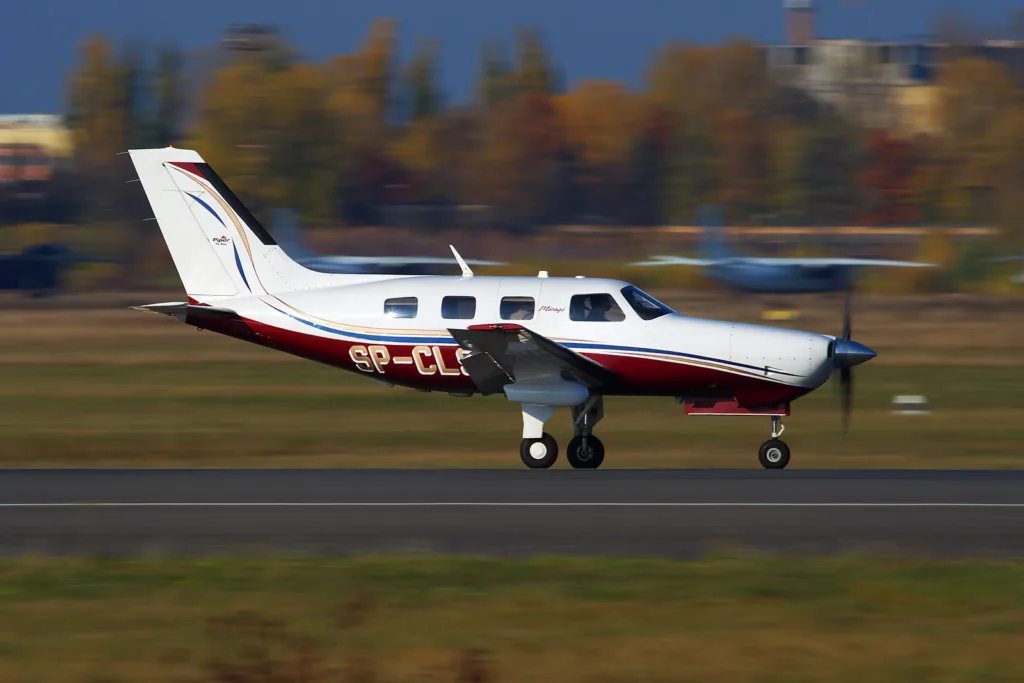
Six people, including a child, died when a Piper PA-46 crashed in Wisconsin on Tuesday, October 13. Shortly before contact was lost, the pilot reported ice accumulating on the aircraft’s wings and requested permission to descend. Investigators now have a critical account of the flight’s final moments, but no official cause has been established.
The aircraft was travelling between Kenosha and Menomonie when it came down in woodland in the Town of Dellona, near Wisconsin Dells. The Sauk County Sheriff’s Office said rescuers found all six people on board dead: five adults and one child. No injuries on the ground or damage to buildings were reported.
Two days after the crash, the sheriff’s office publicly identified the six victims: Ronald R. Riek, 63; Tyler J. Harvey, 36; Mary K. Brion, 67; Amanda M. Haremza, 45; Rylan Haremza, 13; and Kayla C. Turpin, 39, The names were reported by WMTV. Associated Press reported that several victims were from the same family and that the group also included the pilot and a flight instructor.
A descent request followed by loss of contact
According to the National Transportation Safety Board (NTSB), the aircraft was flying at approximately 24,000 feet when its pilot reported icing and requested a descent. Air traffic control cleared the manoeuvre. The aircraft then entered a descending right turn that became progressively steeper before radio communications and tracking data were lost.
The sequence gives investigators a timeline to examine alongside radio exchanges, flight-path data, weather conditions, the wreckage and the aircraft’s maintenance records.
Ice can change how air flows over a wing, increase drag and reduce the margin before a stall. In a light aircraft operating at high altitude, weather decisions, ice-protection capability and the management of a descent can become especially consequential. The report is therefore a significant clue, but does not establish that icing caused the loss of control.
What investigators still need to establish
The NTSB’s investigation encompasses the wreckage, communications and weather evidence. Specialist reporting identifies the aircraft as a Piper PA-46 converted to JetPROP DLX configuration; investigators will also need to establish the relevant ice-protection equipment and its condition. As of 22 October, no official final cause had been established.
Investigators must still determine the conditions the aircraft actually encountered and how it behaved during the descent. Those answers will depend on the evidence recovered, not on the pilot’s final reported hazard alone.
Sources: NTSB and Sauk County Sheriff’s Office information reported by MPR News / Associated Press and ABC News. The cause remains under investigation.
Read next
JOIN THE CONVERSATION
Let’s discuss this story.
A question, a clarification or a different perspective? Share it with us.