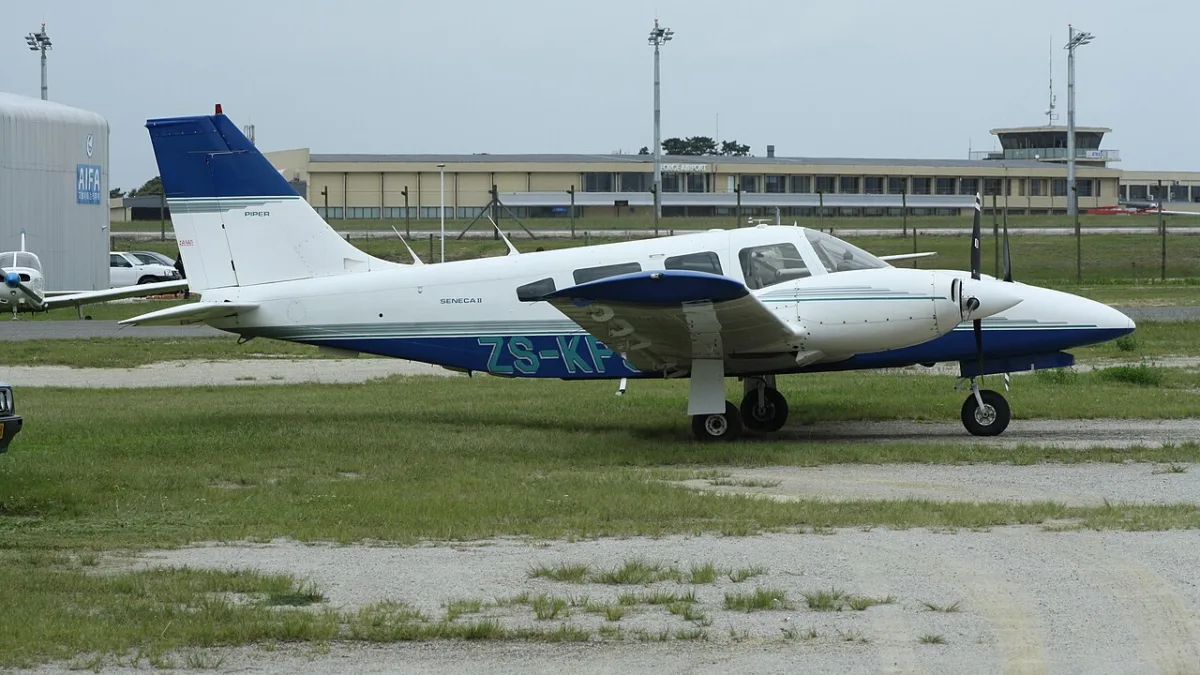
The Piper PA-34 Seneca II registered N212ML, reported missing on September 7, 2026 while flying from the Bahamas to South Florida, is now confirmed as a fatal accident. All four family members aboard were found dead, and investigators have since recovered aircraft components from a debris field off Andros.
The story has therefore changed substantially since the first reports. What began as a search-and-rescue operation is now an active aviation safety investigation led by the Bahamas Aircraft Accident Investigation Authority.
A familiar route, an identified aircraft and four confirmed fatalities
N212ML departed Great Harbour Cay in the Berry Islands for Miami Executive Airport in South Florida. Early reports differ by roughly an hour on the departure time, but they consistently place the loss of contact about 13 miles west of Andros.
The people aboard were pilot Mario Lamar, 80, his wife Lili Lamar, 79, and their grandchildren Sofi Sosa, 28, and Christian Sosa, 22. Relatives said Lamar had more than four decades of flying experience and regularly operated between the Bahamas and Florida.
US registration records identify N212ML as a 1977 Piper PA-34-200T Seneca II, serial number 34-7770205. The light twin is powered by two Continental TSIO-360-series piston engines.
That technical detail matters for identifying the aircraft, but it does not explain the accident. Investigators have not publicly established any specific mechanical failure.
Weather, flight tracking and the search: context without premature conclusions
Bahamian authorities requested support from the US Coast Guard, which deployed an HC-144 Ocean Sentry to assist local search assets.
Poor weather disrupted the operation. That fact should not be confused with accident causation: weather can obstruct search-and-rescue activity without necessarily being the reason an aircraft went down.
On September 8, relatives reported that the four occupants had been found dead at sea after family members joined the search from private boats. Bahamian authorities subsequently confirmed the fatalities.
From that point, the case moved from locating missing people to establishing the sequence of events that ended the flight.
The debris field becomes central to the investigation
The Royal Bahamas Defence Force later located a debris field roughly 11 nautical miles north of Williams Cay, Andros. The AAIA said its preliminary assessment indicated that recovered components and other items were associated with N212ML, although further verification was required.
Additional human remains were also found in the area, beyond those already recovered by relatives.
Public flight-tracking data show N212ML manoeuvring in the Andros area before contact was lost. Some reports have focused on turns near Red Bays and possible efforts to avoid adverse weather.
Those traces can help investigators understand the aircraft’s final route, but they cannot by themselves show why the flight ended in the sea. A course change may reflect weather avoidance, pilot decision-making, a technical problem or another operational factor.
Thunderstorms and poor conditions were reported in the region, and search operations themselves were delayed by weather. There have also been accounts suggesting that the flight may have been deviating around adverse conditions.
No final safety finding has established weather as the cause. The distinction matters: a plausible scenario is not the same thing as an investigative conclusion.
Marine accidents can be especially difficult to investigate because evidence may be dispersed, submerged or damaged by salt water. Recovered engines, airframe sections, instruments and flight-control components can help investigators determine whether damage occurred before impact or as a result of it.
The AAIA can also combine that physical evidence with radio communications, weather data, maintenance history and flight tracking to build a more reliable sequence.
The Bahamas–Florida context and the questions still open
Short general-aviation flights between the Bahamas and South Florida are common because of the archipelago’s geography and its proximity to Miami. They also involve long stretches over water, where emergency options differ sharply from those available over land.
That makes route planning, weather awareness and search-and-rescue coordination particularly important, without implying that any one of those factors caused this accident.
The central questions remain unanswered. Was the aircraft responding to weather? Did a technical problem develop? Was there a loss of control during a diversion or descent? Were there multiple contributing factors?
Until the AAIA publishes formal findings, none of those possibilities should be presented as the cause.
Why this article was rewritten
When AeroSillage first published the story, N212ML was still officially missing. The occupants had not been recovered and no wreckage had been linked to the aircraft.
That situation has changed completely. The article has therefore been rewritten to reflect the confirmed fatalities, debris recovery and the ongoing investigation, rather than preserving an outdated “missing aircraft” framing.
Sources
Associated Press
The Tribune: victims recovered
The Tribune: debris field
FlightAware / FAA registration data
Photo: Piper PA-34-200T Seneca II, the same aircraft model as N212ML but not the accident aircraft. Bob Adams / Wikimedia Commons, CC BY-SA 2.0.
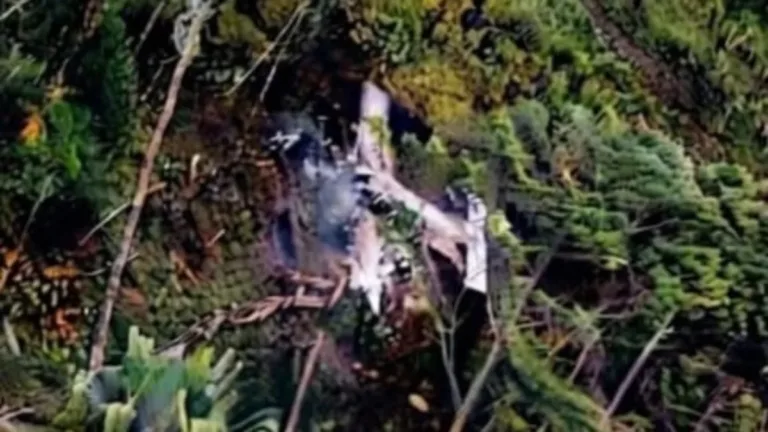
Related: Papua New Guinea: three killed in PAC 750XL crash, another recent general-aviation accident under investigation.


Leave a Reply