Certification, manufacturing quality, airport resilience and infrastructure planning lead the aviation agenda on September 29. The FAA is holding Boeing’s 737 MAX 10 certification over a newly disclosed software issue; Airbus is managing an A321neo manufacturing defect that is affecting deliveries but is not considered an immediate flight-safety issue; Thai Airways is working through a major baggage backlog after Bangkok flooding; Europe is confronting the tension between airport expansion and climate targets; and Australian airlines are questioning how air traffic control resources will be shared between Sydney’s two major airports.
FAA holds 737 MAX 10 certification over software issue
The FAA will not complete certification of Boeing’s 737 MAX 10 until a newly disclosed software problem has been assessed and resolved. The issue can affect access to automated flight guidance in a specific landing and go-around scenario, potentially increasing pilot workload. Boeing is developing a software update while regulators prepare a formal safety review.
Why it matters. The MAX 10 is the largest member of Boeing’s narrowbody family and is central to fleet plans at several major US carriers. Available reporting says there has been no loss of pilot control, and the issue is being addressed through the certification process before passenger service.
Sources: Reuters and FAA reporting, September 28-29.
Airbus manages A321neo manufacturing defect as deliveries tighten
Airbus and Leonardo are investigating a manufacturing defect affecting roughly 500 A321neo aircraft. Protective primer was missing from some fuselage stringers, creating a corrosion-protection issue rather than an immediate flight-safety concern. The finding is nevertheless disrupting production and inspections, with a number of aircraft deliveries moving into an already congested fourth quarter.
Why it matters. Modern aircraft production is a tightly sequenced industrial system. A defect that can be repaired in days can still have an outsized effect when hundreds of airframes at different production stages require inspection or rework.
Source: Reuters, September 28-29.
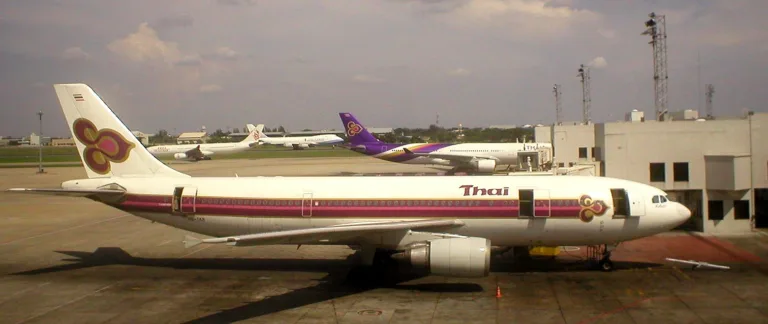
Thai Airways targets 72 hours to clear Bangkok baggage backlog
Thai Airways says around 5,000 bags were stranded at Bangkok Suvarnabhumi following severe flooding and expects to clear the backlog within 72 hours. The airline had already reported dozens of delayed flights and additional cancellations, while Thai military personnel were brought in to support ground operations.
Why it matters. This is a substantive new phase of the Bangkok disruption rather than a repeat of the initial weather story. Recovery is now the issue. Airports can maintain runway operations while baggage, staffing and aircraft rotations remain degraded.
Sources: Reuters and Thai Airways, September 29.
European airport expansion faces sharper climate scrutiny
Planned airport investments across Europe are highlighting the gap between projected traffic growth and emissions-reduction commitments. Airports argue that capacity must be developed before congestion becomes critical, while environmental policy increasingly requires aviation growth to fit within credible decarbonization pathways. ACI World is also urging governments to modernize slot rules and provide stable frameworks for long-term airport investment.
Why it matters. Airport capacity decisions last for decades. Too little investment can weaken connectivity and create congestion; poorly justified expansion can lock in costs and emissions that become harder to reconcile with climate policy.
Sources: Aviation Week and ACI World, September 29.
Sydney airlines question overnight ATC resource plan
Australian domestic airlines have raised concerns over a proposal that could shift Sydney Airport air traffic controllers during curfew hours to support Western Sydney International. The new airport will rely on a digital tower system. Carriers are questioning whether moving resources could reduce resilience at Sydney’s existing airport.
Why it matters. A new airport requires more than runways and terminals. Controller staffing, contingency procedures and the ability to support two major facilities are part of the capacity equation. Digital towers change how controllers work, but technology does not remove the need for sufficient human redundancy.
Source: Australian Aviation, September 29.
The common thread
September 29 is materially different from the previous review. The September 28 edition focused on IndiGo’s Bengaluru tail strike, Air Peace constraints, the Fresno NTSB report, Air France state flights and Avelo’s McKinney expansion. Today’s agenda is about the less visible layers that determine whether aviation works reliably: software certification, manufacturing quality, baggage systems, infrastructure investment and controller staffing.
More AeroSillage aviation news and analysis
What to watch next
The five stories in today’s review are now moving from announcement to execution. For the 737 MAX 10, the next meaningful milestone is regulatory rather than commercial: certification can move forward only after the software response has been assessed and the FAA is satisfied with the result. For the A321neo, attention shifts to the pace of inspections and rework. Even when a manufacturing issue is not considered an immediate flight-safety problem, repeated checks across a large number of airframes can affect delivery sequencing and airline fleet planning.
In Bangkok, the most concrete measure will be whether Thai Airways can reduce the baggage backlog on the timetable it has announced. Restoring flight movements does not automatically mean that baggage handling, staffing and aircraft rotations have fully normalized. In Europe, airport-capacity decisions will continue to sit at the intersection of connectivity, investment and environmental policy. In Sydney, the key question is whether the final air traffic control arrangement provides enough resilience for two important airports without narrowing operational margins.
For that reason, these stories should be followed through confirmed decisions and measurable operational outcomes rather than early assumptions. AeroSillage will separate regulatory decisions, official schedules and observed recovery from scenarios that remain under discussion.