Safety, operational resilience and regulation shape the aviation agenda on October 7. IATA’s Istanbul safety conference is focusing on people, technology and global standards; the FAA is examining a ground collision at Los Angeles; Brussels Airport is preparing for strike-related cancellations; CORSIA is back in focus ten years after the landmark ICAO agreement; and renewed regional conflict is again testing airline risk management.
IATA puts people and technology at the heart of the next safety gains
At the World Safety and Operations Conference in Istanbul, IATA is arguing that aviation’s next safety improvements will depend on combining skilled people, technology and globally consistent standards. Runway incursions and GNSS interference are among the operational threats drawing attention.
Why it matters. Automation can strengthen situational awareness, but only when crews, controllers and organisations understand its limits. The emerging safety challenge is therefore not simply adopting more technology, but integrating it without weakening human judgement.
Source: IATA, October 6, 2026.
FAA examines Delta–Air Canada ground collision at LAX
A Delta Air Lines Airbus A350 made contact with the tail of an Air Canada Boeing 777 while taxiing at Los Angeles International Airport. No injuries were reported and both aircraft require inspection.
Operational significance. Low-speed ground events can still reveal weaknesses in clearances, taxi routing, spatial awareness or airport procedures. The investigation, rather than early assumptions, will determine the relevant factors.
Brussels Airport prepares for Friday strike disruption
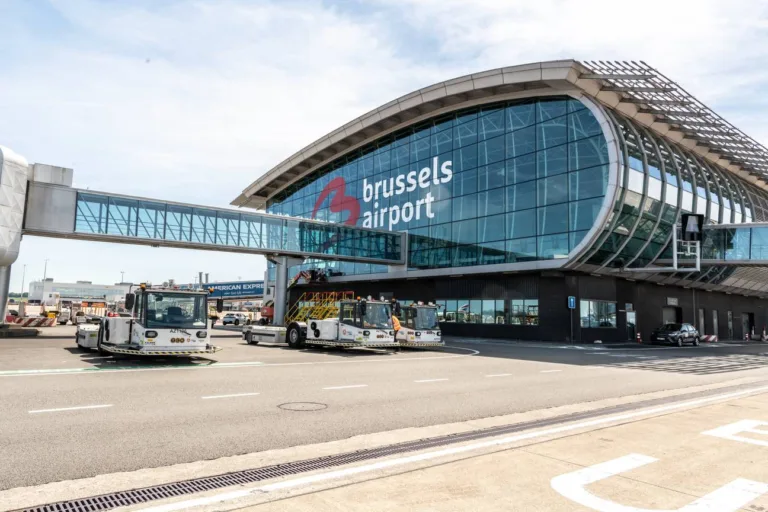
Flight cancellations are expected at Brussels Airport on October 9 as workers at ground handler Alyzia join Belgium’s national strike. The final impact will depend on airline schedules and handling arrangements.
For passengers. Ground-handling disruption can affect baggage, check-in, pushback and aircraft rotations, so knock-on delays may extend beyond the strike window. Travellers should rely on their airline’s latest operating status before travelling to the airport.
CORSIA at ten: IATA calls for a stronger global framework
Ten years after governments agreed at ICAO to establish CORSIA, IATA is urging states to reinforce the global carbon-offsetting framework rather than fragment international aviation into overlapping national schemes.
The bigger picture. CORSIA is only one part of aviation decarbonisation. Fleet efficiency, sustainable aviation fuel and operational improvements remain essential, while the regulatory debate centres on how to maintain global consistency.
Source: IATA, October 6, 2026.
Middle East airport risk returns to the operational agenda
Renewed attacks affecting airport infrastructure in Saudi Arabia underline how quickly regional conflict can alter airline risk assessments. Airports may remain operational while carriers adjust routings, schedules or airspace exposure.
What to watch. NOTAMs, regulator guidance and airline operational decisions are more useful than assumptions based solely on whether an airport is technically open or closed.
What connects today’s stories
From a taxiway collision to GNSS interference, strikes, emissions policy and geopolitical risk, today’s aviation agenda is fundamentally about managing uncertainty. The strongest decisions come from separating confirmed operational facts from preliminary reports and unresolved investigations.