Fuel, security and network constraints set the aviation agenda on October 6. IndiGo’s new fuel charges take effect today, Wizz Air has pushed its Abu Dhabi return into January, Mumbai’s airport-capacity dispute reaches a government meeting, and the FZ1073 investigation now includes the co-pilot’s New Zealand flight-training history. In the Baltic market, airBaltic is meanwhile preparing a sizeable workforce reduction.
IndiGo’s fuel-charge increase takes effect
IndiGo is revising fuel charges on domestic and international bookings from October 6 after a renewed rise in aviation turbine fuel costs. The move by India’s largest airline turns the recent energy shock into a direct passenger-pricing issue.
Why it matters. Fuel remains one of the airline industry’s largest variable costs. Surcharges allow a carrier to respond faster than a full fare-structure redesign, but they also test how much cost can be passed to customers without weakening demand. The wider question is whether competitors follow as elevated fuel prices persist.
Sources: IndiGo and Reuters, October 5.
Wizz Air postpones its Abu Dhabi comeback
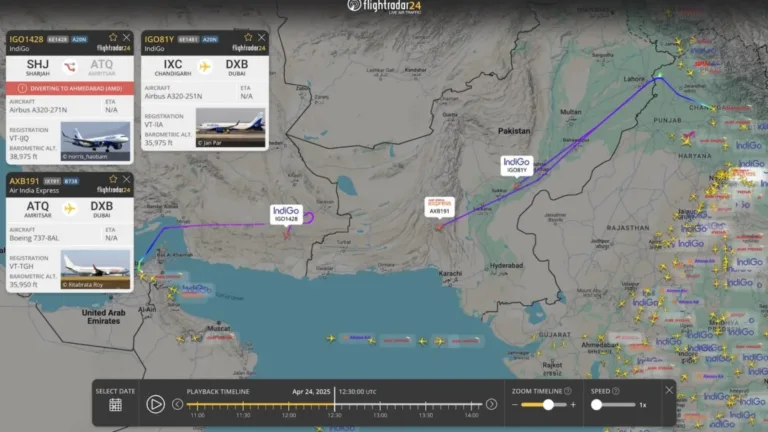
Wizz Air has delayed six planned Abu Dhabi routes from late October until January 10, 2027. The carrier cited updated European security guidance, Iraqi airspace constraints and the economics of longer routings. Jordan services are also affected by the regional security environment.
Network significance. The decision is a reminder that an airspace restriction has both safety and commercial consequences. Detours consume more fuel and aircraft time and can undermine the economics of a low-cost schedule even when a destination airport remains open.
Sources: Wizz Air, EASA and regional reporting, October 5.
Mumbai’s airport transition reaches a government mediation point
India’s Civil Aviation Ministry is due to meet airlines and airport representatives on October 6 over proposed capacity changes at Mumbai. The dispute is linked to the planned redevelopment of Terminal 1 and the transition toward a two-airport system with Navi Mumbai.
Why airlines are pushing back. Moving or cutting international slots affects connections, ground handling, crew planning and historic slot portfolios. The issue is therefore not simply whether Navi Mumbai has capacity, but how the transition is sequenced without breaking established networks.
Sources: Indian Civil Aviation Ministry reporting and IATA.
FZ1073 investigation extends to New Zealand training history
New Zealand police say the flydubai co-pilot involved in FZ1073 spent time in the country around seven years ago completing part of his flight training for a UK-based company. Police are reviewing records and making enquiries, adding New Zealand to an investigation that already has an Australian dimension.
What is and is not established. The training history does not itself indicate wrongdoing or a missed warning. Its relevance is investigative: authorities are reconstructing the co-pilot’s background to determine what information existed, when it existed and whether any safety-relevant information could have been shared. AeroSillage’s FZ1073 investigation tracks the verified developments.
Source: New Zealand Police via Reuters, October 6.
airBaltic plans to cut up to 700 jobs
airBaltic says it plans to reduce its workforce by roughly 500 to 700 positions across its Baltic operations. The scale makes the announcement significant for a carrier whose network strategy has long combined its own scheduled flying with aircraft-and-crew capacity supplied to other airlines.
What to watch. Headcount reductions do not automatically translate into an equivalent capacity cut. The operational question is how the restructuring changes bases, schedules, fleet utilisation and the balance between airBaltic-branded flying and external capacity contracts.
Source: Reuters, October 5.
The October 6 thread
Today’s stories show how quickly external constraints become airline decisions. Fuel prices become surcharges, conflict-zone risk becomes network postponement, airport construction becomes a slot dispute, and security investigations expand across jurisdictions. The common test is whether operators can preserve reliable capacity while costs and operating assumptions change around them.