Sunday’s international aviation picture is less about headline aircraft orders and more about the systems that keep networks usable. A labour dispute is disrupting easyJet’s Portuguese operation, IndiGo is reshaping capacity between Mumbai’s two airports, and a proposed sale of former Spirit Airlines data has opened an unusual safety-culture debate in the United States. Airbus operators also face a targeted A330 inspection campaign, while Kuwait’s continuing transit restriction shows why an airport being open does not necessarily mean a hub is fully functioning.
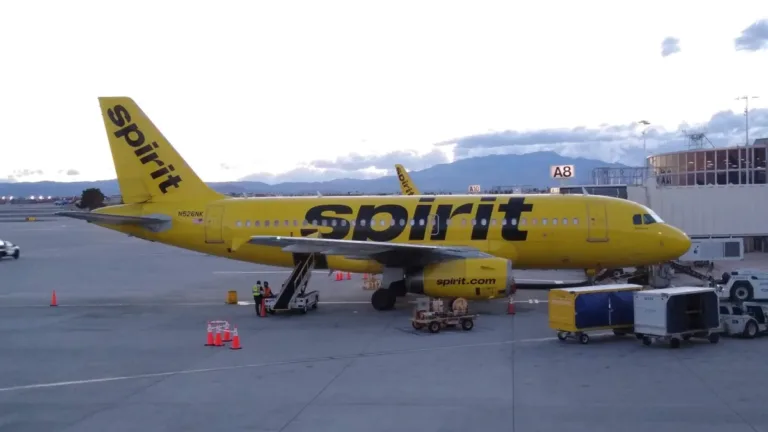
Spirit’s data sale raises a wider safety-culture question
The Allied Pilots Association, representing American Airlines pilots, has objected to a proposed $10 million sale of internal Spirit Airlines data to Google following Spirit’s shutdown. The union says the material includes employment and training information linked to more than 700 members who previously worked for Spirit and argues that confidentiality safeguards must be robust. Google says the information will be anonymised and that customer and financial data are not part of the transaction.
Why this matters beyond privacy: voluntary aviation safety systems depend on pilots and other employees reporting mistakes, hazards and training concerns with confidence that the information will remain protected. If data gathered under one corporate owner can later be repurposed during liquidation, unions fear that future reporting could become less candid. AeroSillage’s earlier analysis of Spirit’s collapse provides the commercial background; the new issue is what happens to safety-sensitive corporate records after an airline disappears.
IndiGo recalibrates its Navi Mumbai operation
IndiGo is adjusting its winter programme at Navi Mumbai International Airport from October 25, with several routes expected to be suspended temporarily or moved back to Mumbai’s established Chhatrapati Shivaji Maharaj International Airport. The carrier will retain a meaningful Navi Mumbai presence, including ATR regional flying, but some traffic is being repositioned where international connectivity is easier to build.
The network lesson: opening a second major airport does not automatically split a metropolitan market in half. Airlines must balance local demand, connecting flows, aircraft rotations and the value of established international banks. IndiGo’s changes will therefore be closely watched as a measure of how quickly Navi Mumbai can mature from a capacity-relief airport into a hub with its own network logic.
easyJet’s Portugal strike puts recovery options under pressure
Cabin crew industrial action in Portugal is continuing through October 6, affecting Lisbon, Porto and Faro. Around 350 flights are expected to be cancelled over the strike period, with international services among those affected. Minimum-service requirements preserve some flying, including a Lisbon–London return service, but they do not protect the wider schedule.
For UK and Irish travellers: the risk grows as a multi-day disruption progresses because spare seats on alternative flights become harder to find. Passengers should rely on the airline’s own flight status and rebooking instructions rather than assuming an airport is broadly “open”. AeroSillage has a dedicated guide to the easyJet October strike and the routes most exposed.
Airbus A330 checks show the operational cost of quality escapes
Airbus has asked operators to inspect roughly 160 A330 aircraft, including about 15 military tankers, after a tool was discovered in a horizontal tailplane. The affected aircraft were delivered between January 2021 and July 2026. Airbus says aircraft currently in production have been inspected and remain safe for delivery.
What the wording matters: an inspection request is not the same as grounding an entire fleet, and the event should not be presented as a design flaw without evidence. Yet even a contained manufacturing escape creates work for airlines: affected serial numbers must be identified, checks scheduled and findings fed back through the manufacturer and regulatory chain. It follows earlier A330neo quality concerns covered in our September report, although the two issues should not be conflated.
Kuwait remains open to flights but closed to normal transit
Kuwait’s civil aviation authority has said reports that international transit operations have reopened are inaccurate. The suspension remains in place until further notice. That distinction matters as Gulf schedules continue to recover unevenly from regional disruption and airlines maintain revised routings and capacity.
For connecting passengers: an airport accepting arrivals and departures does not automatically mean passengers can construct a normal transfer itinerary through it. Travellers holding multi-sector tickets should confirm that their connection is permitted and protected by the issuing carrier, particularly when separate airlines or tickets are involved.
Palembang delays show how local weather can ripple through a network
Eight flights at Sultan Mahmud Badaruddin II Airport in Palembang, Indonesia, were delayed as low visibility affected operations. The airport continued monitoring conditions rather than treating the disruption as a blanket closure.
Why a local event belongs in an international briefing: Southeast Asian domestic networks feed major international gateways, and delays at regional stations can push aircraft and crews out of sequence later in the day. The operational distinction between delays, diversions and an airport closure is important: passengers should not infer one from the other.
What to watch
Today’s common thread is resilience rather than expansion. Airlines are managing labour constraints, airport geography, manufacturing checks, weather and the governance of safety data. Over the next few days, the most useful signals will be whether easyJet’s Portuguese operation normalises after October 6, whether A330 inspections remain limited in operational impact, and how quickly Gulf transfer restrictions continue to ease.
Primary references include Reuters, Kuwait civil aviation statements, Portuguese strike information and current Indian and Indonesian operational reporting. Situation checked on the morning of October 4, 2026.