Aviation news on Monday 14 September is dominated by the consequences of the fatal Boeing 767 cargo accident in Miami, labour disruption affecting easyJet in Europe and another surge in oil prices that could increase airline costs. AeroSillage highlights six developments published or confirmed since the previous day, focusing on what has changed rather than repeating stories without meaningful new information.
1. Amazon suspends operations with 21 Air after the fatal Miami accident
Amazon has suspended flights operated on its behalf by 21 Air following the Boeing 767-300 freighter accident in Miami. The aircraft overran the runway and struck several vehicles on the ground, killing five people. The decision is an important development because the accident is now directly affecting the organisation of the Amazon Air cargo network while the NTSB continues its investigation.
Initial information released by investigators had already pointed to a problematic approach and landing, including excessive speed and an attempted go-around initiated after touchdown.
Key point: Amazon’s suspension of 21 Air turns an aviation accident into an operational and commercial issue. Capacity may need to be redistributed quickly among other Amazon Air operators.
Source: Reuters, 14 September 2026.
2. easyJet: two strike days for pilots based in France
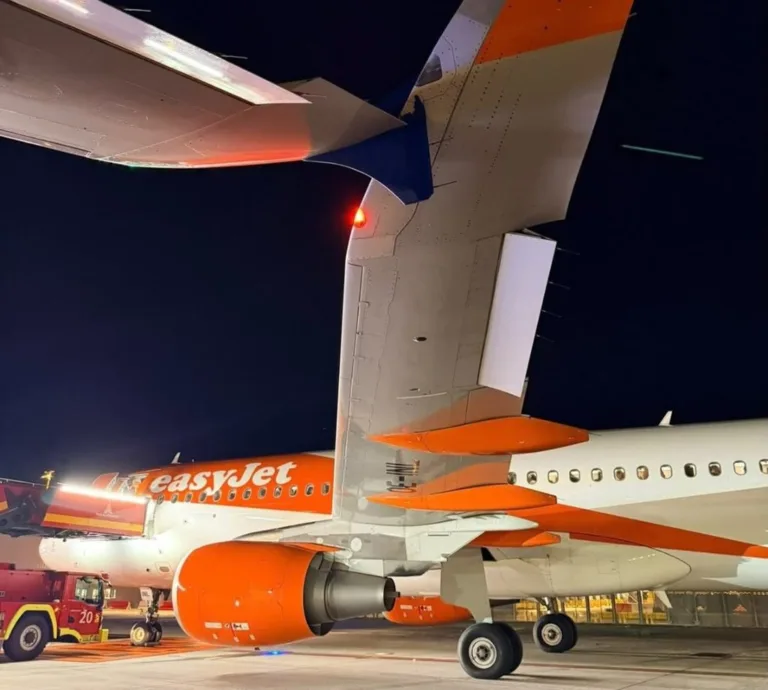
easyJet pilots based in France called for strike action on 13 and 14 September in a dispute involving schedule instability and fatigue. The action follows labour tensions already seen among cabin crew during the summer. For passengers, the main risk is last-minute cancellations and schedule changes at French bases, with possible knock-on effects on subsequent rotations.
The episode also underlines the importance of assistance and rerouting obligations, covered in the AeroSillage Passenger Rights desk.
Key point: beyond the number of flights affected, roster stability is becoming a lasting labour issue for airlines that use aircraft and crews intensively.
Sources: specialist media and French union information, 13–14 September 2026.
3. Italy: a day of strikes weighs on easyJet and several major airports
Italy faced several overlapping labour actions on 13 September: easyJet cabin crew, airport-security staff at Rome Fiumicino and Ciampino, and action affecting Florence, Pisa, Olbia and Cagliari. Italian essential-service rules require some flights to operate during protected periods, but concentrating several disputes on the same day increases the risk of cascading delays.
Effects can continue into Monday through aircraft and crew repositioning, particularly on the first departure waves.
Key point: the vulnerability comes not from one dispute but from overlapping strikes involving crews, security and ground services. A local disruption can quickly become a network problem.
Sources: Italian Ministry of Infrastructure and Transport, Italian media, 13 September 2026.
4. Oil prices come under renewed geopolitical pressure
Oil prices jumped by more than 3% on Monday amid renewed tensions in the Middle East and threats to strategic infrastructure and export routes. Brent was trading around $108 a barrel according to Reuters. The move is closely watched by aviation because fuel remains one of airlines’ largest cost items even when carriers have financial hedges in place.
A sustained increase in jet-fuel prices can squeeze margins, accelerate capacity adjustments and eventually feed into fares.
Key point: a short-lived spike does not automatically mean immediate fare increases, but oil remaining above $100 for a prolonged period would materially change airline economics.
Source: Reuters, 14 September 2026.
5. United States: nearly 4,000 flights delayed amid thunderstorms
Heavy rain and thunderstorms disrupted air traffic in the north-eastern United States on Sunday. Nearly 4,000 flights accumulated delays during the day, with traffic-management measures affecting Boston Logan, New York JFK and LaGuardia among other airports. The FAA used temporary ground stops to limit arrivals during the most severe periods.
The disruption comes while the US system is also dealing with air traffic control staffing pressure, reducing the margin available to recover when weather suddenly cuts capacity.
Key point: weather is the immediate trigger, but the operational impact depends on the ability of air traffic control and airlines to absorb and then recover from delays.
Sources: FAA and US media, 13–14 September 2026.
6. Wizz Air opens a new phase of growth in Turin
Wizz Air launches several new routes from Turin on 14 September, including Rome Fiumicino, Barcelona and Bilbao. The airline is significantly strengthening its presence at the Piedmont airport with a mix of domestic and international services that is due to expand further in the coming weeks.
The Italian expansion illustrates the increasingly intense competition between low-cost airlines in Europe’s regional markets, including domestic routes where high-speed rail is a direct competitor.
Key point: Turin is becoming a new growth market for Wizz Air. The Rome route is particularly interesting because it directly pits the low-cost airline model against high-speed rail in a highly competitive domestic market.
Source: Torino Airport, schedule announced for 14 September 2026.
Main sources
- Reuters, 13–14 September 2026
- National Transportation Safety Board (NTSB)
- Federal Aviation Administration (FAA)
- Italian Ministry of Infrastructure and Transport
- Torino Airport