Aviation news on Friday 11 September highlights the same challenge on several continents: absorbing traffic growth while infrastructure, staffing and costs remain under strong pressure. From Sydney to the United States, air traffic control is central to the picture, while airlines adjust capacity and strategy in response to higher operating costs.
Sydney: flights cancelled because of controller shortages
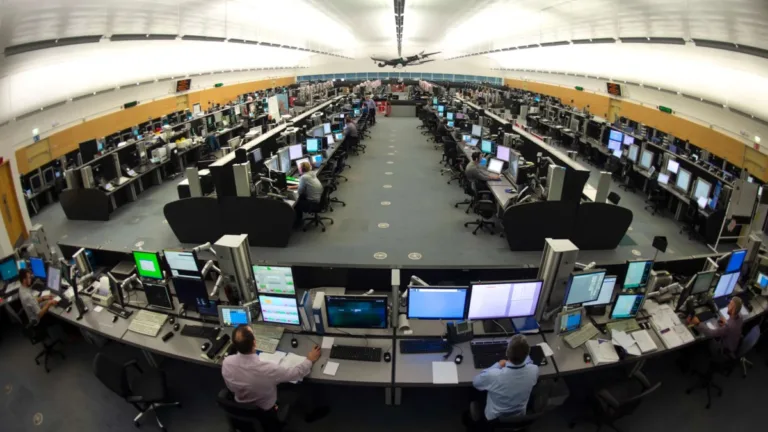
Sydney Airport faced another round of disruption on Friday morning because of a shortage of air traffic controllers. Airservices Australia imposed traffic-management measures, leading to around 14 arrival cancellations and delays sometimes exceeding an hour. The agency acknowledges a tight staffing position: out of 49 controllers employed in Sydney, 41 are required for full operations while eight are unavailable on long-term absence. The disruption comes as several recent near-collision events are already under investigation by the Australian Transport Safety Bureau.
Key point: beyond the day’s cancellations, Sydney illustrates a global weakness: controller shortages reduce the resilience of major hubs and can turn an unexpected absence into immediate operational disruption.
United States: FAA wants to anticipate congestion rather than react to it
FAA Administrator Bryan Bedford met leaders of several major US airlines around the rollout of SMART, a new system intended to anticipate disruption more effectively. The tool is expected to combine airline schedules, weather, airport capacity and airspace constraints to forecast congestion and help reorganise operations before departure. It is part of a wider multibillion-dollar modernisation of US air traffic control.
Key point: the FAA is trying to shift traffic management from a reactive model to a predictive one. If the system performs as intended, the benefit will not be purely technological: it could reduce cascading cancellations during the most severe weather events.
JetBlue: stronger revenue but a higher operational bill
JetBlue has raised its unit-revenue outlook for the third quarter, indicating that demand remains resilient despite higher fares. At the same time, the US carrier warns that costs are increasing faster than expected. Weather disruption, air traffic control constraints and higher fuel prices are weighing on operations. JetBlue has therefore cut its capacity-growth forecast to between 1.5% and 3.5%.
Key point: the contradiction is revealing: filling aircraft and increasing revenue are not enough if fuel, irregular operations and recovery costs rise even faster.
Russia–India: talks cover up to 85 Il-114-300 aircraft
United Aircraft Corporation is seeking to establish itself in India’s regional market through two preliminary agreements covering up to 85 Il-114-300 turboprops. A letter of intent covers 50 aircraft for Pinnacle Air and a memorandum another 35 for Sleek Aviation. These are not yet firm orders, but UAC hopes to convert the commitments by year-end. The Russian manufacturer is also discussing possible local production of the SJ-100 in India with HAL.
Key point: the interest is industrial as much as commercial. Moscow is seeking new outlets under sanctions, while New Delhi wants to develop a domestic aerospace industry and meet growing regional-connectivity demand.
easyJet: French pilots threaten strike on 13 and 14 September
easyJet pilots based in France announced strike action from 04:59 on 13 September until 23:59 on 14 September. The dispute concerns pay and roster organisation among other issues. The exact scale of disruption remained difficult to measure and depended on participation and the airline’s schedule adjustments. Paris, Lyon, Nice and other French stations could be affected.
Key point: after a summer already marked by air traffic control disruption and industrial action, the notice creates another operational risk for the weekend. Travellers should monitor their flight directly with the airline.
Industry: mergers and acquisitions rebound as production rates rise
The gradual increase in output at Airbus and Boeing is restoring investor confidence in the aerospace supply chain. According to data reported by Reuters, 154 commercial-aerospace transactions were recorded in the first eight months of 2026 with a combined value of around $14 billion. Companies with scarce expertise, skilled labour or capacity that can support higher production are attracting particular interest.
Key point: supplier consolidation mirrors the industrial recovery. It can strengthen fragile businesses, but it also concentrates the supply chain further just when Airbus and Boeing need suppliers capable of sustaining high output.
Also on AeroSillage
For further reading, follow the Fleet & Industry desk and the Safety & Regulation desk, where AeroSillage tracks industrial consolidation, airline operations and infrastructure resilience.
Main sources
Reuters, 10–11 September 2026: Sydney controller shortages; FAA-airline meeting on SMART; JetBlue quarterly outlook; aerospace mergers and acquisitions. Indian Express, 10 September: preliminary UAC agreements for the Il-114-300 in India. SNPL and UK media, 10 September: easyJet pilot strike notice in France.