Geopolitics is once again taking centre stage in aviation news on 20 September. The attack affecting fuel facilities at Riyadh airport has immediate consequences for travellers from Europe, while in the Maghreb new restrictions applied to Algerian nationals travelling to Morocco are beginning to produce concrete effects at boarding. At the same time, airlines are still investing and opening markets: Riyadh Air is adding Manchester, air-service rights between Canada and Tunisia have been expanded, and the industry is already preparing the next generation of aircraft. AeroSillage highlights six stories that show an air transport sector caught between commercial growth and operational fragility.
1. Riyadh: airport attack leads Air France to cancel flights
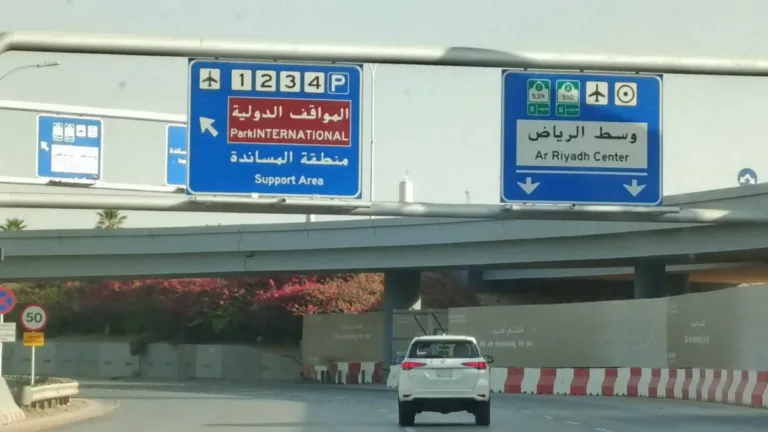
A fuel depot in the area of King Khalid International Airport in Riyadh caught fire on Saturday 19 September in the context of an attack claimed by the Houthis. Missiles and drones targeted several areas of Saudi Arabia and the authorities activated air-defence systems. Traffic at Riyadh was disrupted. For European travellers, the most visible consequence was Air France’s decision to cancel its flights to Riyadh through 22 September inclusive.
Why it matters. The event is more than a one-off disruption. Gulf airport and energy infrastructure sits at the heart of a global connecting network; a prolonged deterioration in security can lead to cancellations, diversions and higher operating costs. For Air France, the priority is to avoid exposing crews and passengers to a rapidly evolving situation. The next question is whether operations can return to normal after 22 September or whether other airlines will adjust their own schedules.
Sources: Saudi authorities, Air France, Reuters, Saudi and international media, 19–20 September 2026.
2. Morocco: restrictions affecting Algerian travellers become an operational issue
Reports that emerged during the week about boarding conditions for Algerian nationals travelling to Morocco are becoming more concrete. Several Moroccan and Algerian media outlets report that Air France has applied since 16 September an instruction leading to boarding being refused to some Algerian passengers who do not hold a valid Moroccan residence permit. The measure notably affects itineraries connecting through Paris because there are no direct commercial flights between Algeria and Morocco.
Why it matters. This is a very practical issue for travellers: Paris plays an important role in connections between Algeria and Morocco. A change in admissibility rules can therefore affect tickets sold on fully confirmed itineraries. Caution remains necessary over the precise legal scope of the measure because Moroccan authorities have not, at this stage, published a detailed public text setting out a general ban. Travellers concerned should verify their eligibility before going to the airport.
Sources: Medias24, TSA Algérie, Air France information reported by the press, 19 September 2026.
3. Riyadh Air launches Manchester despite a difficult regional context
Riyadh Air launched its new Riyadh–Manchester route on 19 September. The service is scheduled three times a week with a Boeing 787-9 and becomes the young airline’s second UK destination after London Heathrow. The opening comes just as the Saudi capital has experienced an attack that disrupted its main airport.
Why it matters. The contrast summarises Saudi Arabia’s ambition: rapidly build an international hub while operating in a more exposed geopolitical environment. Manchester gives Riyadh Air access to a large catchment area and another point in the UK market without depending exclusively on Heathrow. For European airlines, the carrier’s expansion adds another competitor on flows between Europe, Asia and the Middle East. Riyadh’s ability to guarantee regular and safe operations therefore becomes as important as the pace at which new routes are opened.
Sources: Riyadh Air, Aviation Week Routes, schedule information published 18–19 September 2026.
4. Canada–Tunisia: expanded traffic rights pave the way for more services
Canada and Tunisia have expanded their air-services agreement. Each country may now authorise up to seven weekly passenger flights to the other, up from four previously, with access to all points in each territory instead of a single destination. Cargo rights are now unlimited.
Why it matters. The agreement does not automatically mean that seven flights will operate every week, but it removes an important regulatory constraint. The market directly concerns Tunisian and broader Maghreb communities in Quebec and could allow more frequencies or even new operators. It is also part of the rapid expansion of Montréal’s international network. In a market where visiting-friends-and-relatives travel is highly seasonal, greater traffic rights can strengthen competition during peak periods.
Sources: Transport Canada, Aviation Week Routes & Networks, Canada–Tunisia bilateral agreement, September 2026.
5. Boeing 777X: engine issue further complicates the ETOPS process
The 777-9 programme continues to face a technical issue affecting the GE9X engine. According to FlightGlobal, a problem involving an intermediate seal requires a certification plan before the FAA can authorise the 777-9 ETOPS test programme. These trials are essential to demonstrate the aircraft’s ability to operate for long periods far from a diversion airport.
Why it matters. The 777X is already several years late. An additional problem does not automatically imply another major delay, but the certification schedule has little margin left. For customer airlines relying on the 777-9 to replace long-haul wide-bodies, each regulatory milestone affects fleet plans, cabin programmes and route openings. The case also highlights that an aircraft can be close to general certification while still needing to clear critical operational approvals.
Sources: FlightGlobal, GE Aerospace, FAA certification information reported 18–19 September 2026.
6. Europe: €290 million to accelerate cleaner aviation technologies
Clean Aviation, the European aviation research partnership, has selected 19 projects that are expected to share around €290 million in funding. The programmes include work linked to Airbus ZEROe and to hybrid-electric propulsion technologies, including research around Rolls-Royce’s UltraFan.
Why it matters. The objective is not to promise a zero-emission aircraft in the short term. This funding is intended to mature technologies that may reduce fuel consumption and emissions in future generations of aircraft. The sector faces a contradiction: global demand continues to grow while breakthrough solutions will not be available at scale for several years. European public funding therefore aims to ensure that the transition does not rely solely on SAF, whose volumes remain very small compared with global jet-fuel consumption.
Sources: Clean Aviation, Airbus, Rolls-Royce, FlightGlobal, 18–19 September 2026.
The thread running through today’s news
This edition illustrates an increasingly visible tension. Air transport continues to invest in routes, fleets and future technologies, yet its growth remains vulnerable to events outside airlines’ direct control: conflict, entry restrictions, critical infrastructure and certification. Riyadh is the clearest example: an airline can open a new international route on the same day its hub is affected by an attack. For travellers, this volatility increases the importance of checking entry requirements and flight status until departure. For the industry, it is another reminder that in 2026 operational resilience has become as strategic as network growth.